Need black mold removal services in Eagle?
Found something odd on a wall or ceiling? Send a quick request and a local provider can follow up to talk through your options.
No obligationMold help across the Eagle area from local providers
Request an estimate today
Say you find black or dark green spots in a corner of the basement. Your mind races. Is it dangerous? Can you scrub it off? The honest answer is that it needs a closer look, and you do not have to guess.
Movementsrepresents Mold Help is a referral service. We do not do the work ourselves. We connect homeowners in Eagle and the Eagle area with independent providers in our network who handle black mold removal in homes. A provider checks the spot, finds the moisture feeding it, and explains the plan in plain words. Request an estimate to see your options, with no obligation. Prefer to talk it through? Request a callback to check provider availability.
Say you pull a box off a basement shelf and spot dark, speckled patches on the wall behind it. Your heart jumps. You want to grab a spray bottle and scrub. Stop for a moment. Slow down first.
Dark growth is common after a wet season, and it can be fixed. A calm first hour matters more than a fast one.
That is enough for now. The next move is getting a provider to look at it.
Say a friend looks at your wall and says, "That's toxic black mold." People use that label for many dark molds. They can look alike. Only testing can tell you what is actually growing.
What matters more is this: mold that keeps coming back is a sign of a moisture problem. It tends to look dark green or black, a bit fuzzy or slimy, and it often comes with a musty smell. Some people notice coughing, itchy eyes, or a stuffy nose around it. If anyone in your home has asthma or allergies, mention that to the provider.
Say it is early spring and the snow is melting fast. Water creeps along the foundation. A week later, the bottom of a basement wall smells damp.
Black mold loves places that stay wet and still:
Older frame houses and bungalows have plenty of these spots. It is not a sign you did anything wrong.
Say you scrub the wall with bleach and the stain fades. It looks fixed. Two weeks later, the dark spots return.
Bleach can lighten the surface, but it does not reach the roots in porous materials like drywall, wood, and insulation. The water in the mix can even feed the growth underneath. Scrubbing also stirs up spores. A provider uses containment and proper tools so the problem does not spread to other rooms.
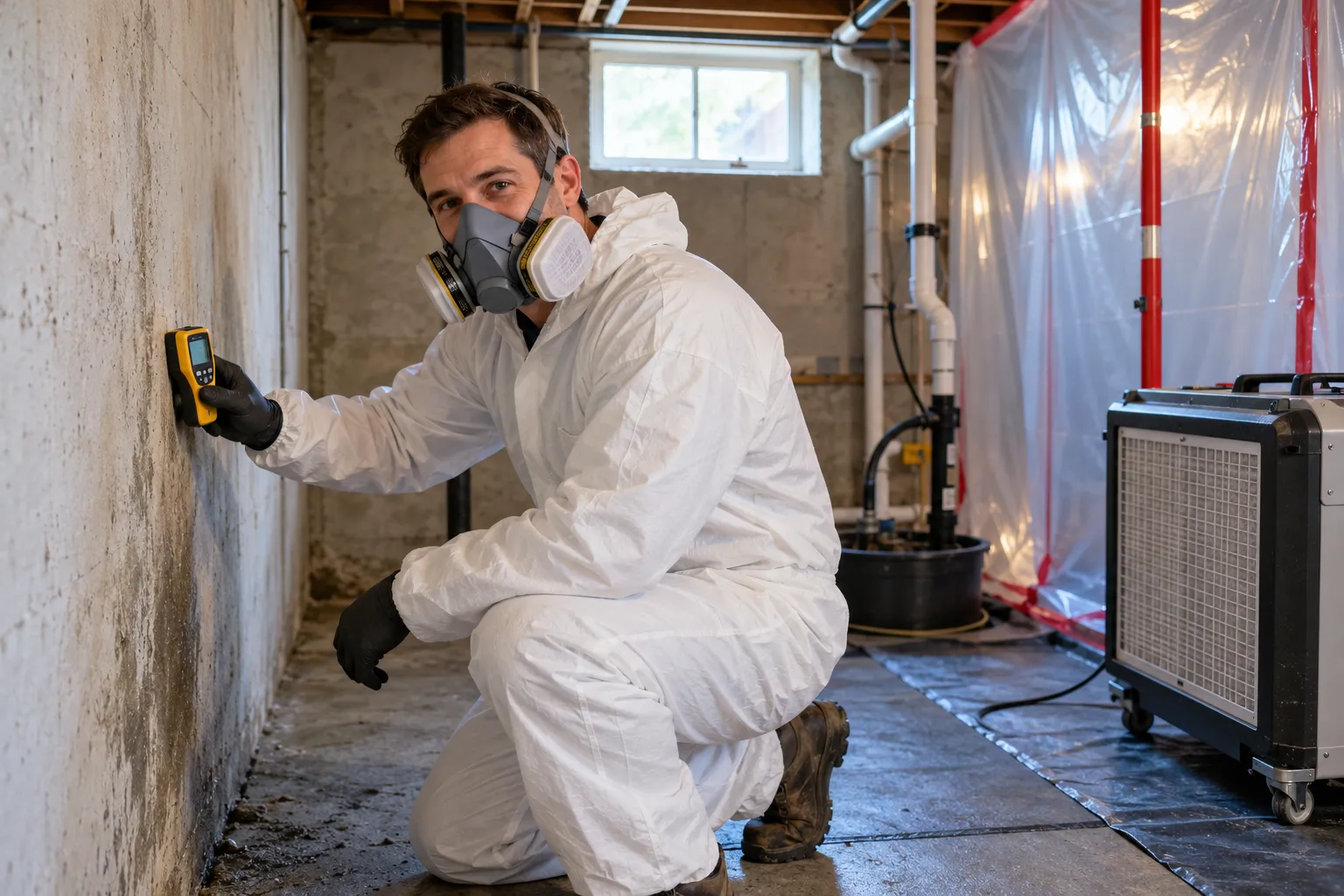
Here is the usual path a local provider follows. Details vary by job.
The provider checks the area, notes how far it reaches, and may suggest testing to confirm the type and size of the problem.
Plastic barriers and air filters keep spores from drifting into the rest of your home during the work.
Damaged porous materials, like soaked drywall, are cut out and bagged. Hard surfaces are cleaned with special tools and HEPA vacuums.
The area is dried fully. Many providers check moisture levels before anything is closed up or rebuilt.
Say you have the mold removed, but the sump pump keeps running and the wall stays damp. The growth will return. Removing it is only half the job.
A good provider helps you find the moisture source. That could be a slow pipe leak, a gutter that dumps water by the foundation, poor airflow in a bathroom, or groundwater pushing in. Fixing the cause is what keeps the problem from coming back. Some of this may need a plumber or roofer, and the provider can tell you what to ask for.
Moisture follows the weather. Spring flooding and snowmelt soak basements. Hot, humid summers make cool basements sweat. Heavy storms and hail can open up roofs. In deep winter, warm indoor air hits cold walls and leaves damp spots.
That means mold can show up in any season. Many providers are busier after big storms and thaws, so it helps to ask early. Request a callback to check provider availability, or send a request and let the details come to you.
Say the mold was right behind a bookshelf, and now you are wondering about the books, the couch, and the boxes of photos.
Hard items like plastic, glass, and metal can often be cleaned. Soft items like carpet, mattresses, and some fabrics are harder to save if they were wet for long. Move items only after the provider says it is okay, since moving them can spread spores. Take photos of anything damaged. Some policies may cover sudden damage, so check your policy, and providers can often help document damage for a claim.
Before you agree to anything, it helps to ask:
Clear answers are a good sign. Vague ones are a reason to keep looking.
You have taken the right first steps already. Request an estimate and Movementsrepresents Mold Help will connect you with a local provider in our network.
A provider checks how far the growth reaches and where the dampness started.
Barriers and air filters help keep spores from drifting into the rest of your home.
Damaged materials are cut out and bagged, and hard surfaces are cleaned.
The space is dried out and checked so it is ready for repairs.
Prices vary by job size, materials, and how hard the area is to reach. These are typical U.S. ranges only. Ask each provider for a written quote before work begins.
| Item | Typical range | Notes |
|---|---|---|
| Small patch (under 10 sq ft) | $500 – $1,500 | Often a bathroom wall or closet corner |
| Larger room or basement wall | $1,500 – $4,000 | Depends on how far it spread behind surfaces |
| Widespread or whole-home growth | $4,000 – $10,000+ | May include several rooms or the HVAC system |
| Mold testing | $300 – $1,000 | Price changes with number of samples |
| Drywall or insulation replacement | $300 – $2,000 | Needed when materials stayed wet |
| Fixing the moisture source | $500 – $5,000+ | Leaks, drainage, or ventilation fixes vary widely |
Close off the room, leave the mold alone, and keep family members and pets away from it.
Tell us a little about the spot and your home, and share a few photos.
A provider looks at the area, explains what they see, and gives a written quote.
The provider removes the growth, dries the space, and helps you address the cause.
You are matched with independent providers who work near you, not a distant call center.
We slow things down and explain each step in everyday words, so nothing feels confusing.
Request an estimate and compare your options. You decide if and when to move forward.
Clear first-hour tips help you stay steady while you wait to speak with a provider.
Found something odd on a wall or ceiling? Send a quick request and a local provider can follow up to talk through your options.
No obligationFound something odd on a wall or ceiling? Send a quick request and a local provider can follow up to talk through your options.
No obligation